While some negative impacts are already baked into our weather for the coming decades, what we do now will determine if our Sarasota home remains a special place or becomes just another place. This is OUR choice.
The CAC brings you peer-reviewed science, even when it is sobering. But these Awards are the balance—the pride and inspiration that lead to the outcomes we all want: to live in this beautiful place with safety and enjoyment.
I want to spend a few minutes talking about trends in hurricanes. Yes, we have always had them, and we have had some severe ones in the past.

This image highlights how the character of hurricanes in the Atlantic Basin has changed in recent decades. Comparing the period from 1974–1999 with the years since 2000, the data shows a clear increase in storm activity and intensity. Named storms have risen from 273 to 412, major hurricanes have increased by about 56 percent, and the number of Category 5 storms has surged by roughly 150 percent.
Together, these numbers point to a fundamental shift in storm strength, reinforcing why coastal communities like those along the Suncoast must prepare for more powerful storms and build resilience for the decades ahead.

This image shows just how active the Gulf Coast has been with major hurricane landfalls in recent years. Since 2017, the region has experienced a remarkable cluster of powerful storms, including Harvey, Michael, Laura, Ida, Ian, Idalia, Helene, and Milton. Many of these systems reached Category 3, 4, or even Category 5 strength as they approached land.
The map illustrates how frequently intense hurricanes have tracked across the Gulf and into Florida and neighboring states, underscoring that the Gulf Coast is now in a period of heightened hurricane risk where communities must prepare for stronger storms arriving more often.

This image highlights one of the most concerning trends in modern hurricanes: rapid intensification. The data shows a more than 70 percent increase in storms that rapidly strengthen, jumping multiple categories in a short period of time. In the late 20th century, there were 101 such events, but since 2000 that number has climbed to 172.
For coastal communities, this means the window of safety is shrinking. Storms are now powering up much faster than in the past, leaving less time for forecasts, preparations, and evacuations before dangerous conditions arrive.

This image highlights the dramatic increase in the most powerful hurricanes striking the Gulf Coast. From 1974 to 1999, only one Category 4 or 5 hurricane made landfall along the Gulf Coast. Since 2000, that number has jumped to eight, representing a 700 percent increase. These are the storms that cause the greatest destruction, bringing extreme winds, devastating storm surge, and widespread damage to coastal communities.
The trend underscores why preparing for stronger hurricanes is becoming increasingly important for communities across the Gulf Coast and the Suncoast.
The data tells the story of a fundamental shift in the DNA of our storms. As our atmosphere and oceans heat, the excess energy created acts as high-octane rocket fuel for the hurricanes hitting Florida and the Gulf Coast.
The convergence of a growing population, rising seas, and these intensifying storms is now the primary engine driving our economy. Climate can no longer be a footnote in our planning; it must be THE foundation for decisions that will build our future. To meet this challenge, we can no longer afford the “Inertia Tax”—the cost of trying to solve systemic problems in isolation and expecting the climate of the 20th century to extend into this one. Well, that’s a NO GO! I think we learned that lesson in 2024.
Taken together, this information is good reason to launch the Sarasota Living Laboratory. Being successful here means creating a unified innovation corridor stretching from the south and north campuses of Selby Gardens all the way to USF and then beyond. By leveraging our cultural assets and deploying a “shared nervous system” of high-density measuring sensors and AI dashboards, we aim to transform our Bayfront into an instrumented testbed for coastal resilience.
We aren’t just watching the weather, we are instrumenting the future
The Living Laboratory is a 10-mile innovation corridor. It’s where science meets the street. We’re turning Sarasota into the Adaptation Hub because we need to get ahead of the changes we are experiencing. Do you know there isn’t one single sea level rise sensor in this area right now? Every great city and region measures its success, and we need to do it too.
Sarasota is the perfect place for this Living Laboratory because we are a rapidly growing city with the rare opportunity to define the future. This isn’t just about protecting our “Crown Jewels” along the innovation corridor. It’s about building a scalable model for adaptation that attracts the next generation of innovators.
Imagine young, educated entrepreneurs joining us to build a dynamic community that solves one of the greatest challenges of our time. But sensors and data points don’t tell the whole story; the leaders in this community do.
We are moving past the era of being “weather watchers.” We are becoming the architects of an adaptive society. We are shifting from reactive spending to proactive leadership—ensuring that Sarasota doesn’t just survive the coming decades but becomes the global blueprint for how a coastal community thrives. Getting in front of these threats is the smartest financial decision we can make. A dollar invested in proactive measures can save $6 to $30 compared to post-event response.
2026 Hurricane Season Forecast Day
As we prepare for the 2026 hurricane season, our goal is clear: the storms may be getting stronger, but our community is becoming unbreakable. Please get your tickets for the acclaimed CAC National Hurricane Forecast the morning of Thursday, April 23, at the USF Selby Auditorium. You can buy your tickets here.
In this environment, indecision is the most dangerous decision of all. We must embrace the obvious: climate warming is the ultimate architect of our future, shaping our lives, our businesses, our families, and our economy. Our resilience now depends on a simple mathematical reality: our response must move faster than the changing weather.
We get to decide: will Sarasota remain a Special Place, or will it become just another place? Looking around this room, I think I know the answer.
A packed house for 4th Annual CAC Climate Champions Awards & Benefit Ceremony
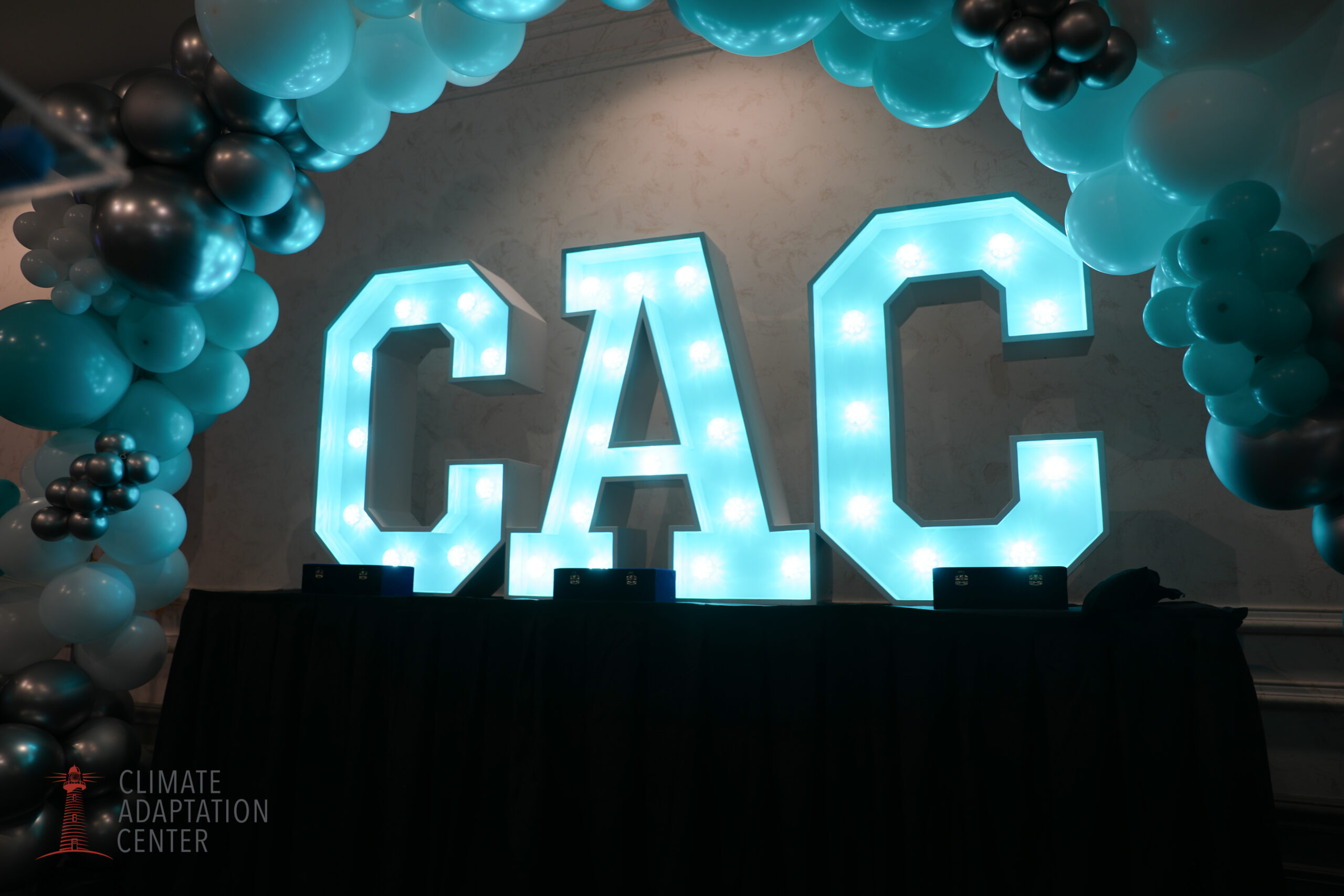
On March 11, a packed house of community leaders enjoyed a beautiful luncheon and inspiring Academy Awards-style event at Michael’s On East. It was the first time Climate Champions Awards were conveyed to government officials, and both Manatee and Sarasota County administrators, along with numerous mayors, commissioners, business leaders, academics, and philanthropic leaders, helped make the day one to remember.
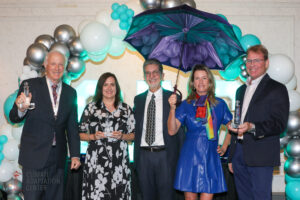
2026 Climate Champions (from L to R) Charlie Hunsicker, Sara Kane, hosts Bob Bunting and Eliabeth Moore and 2026 Climate Champion John LaCivita. (photo by Janet Combs)
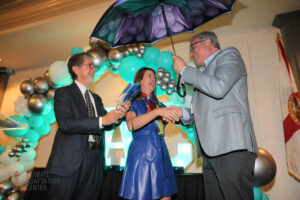
Bob Bunting and Elizabeth Moore give this year’s Italian-made umbrella to raffle winner, Greg Stikeleather. Just as an umbrella covers and affects everything beneath it, climate conditions shape the systems we depend on every day. (photo by Janet Combs)
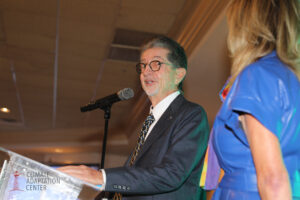
Co-hosts Bob Bunting and Elizabeth Moore have a fun moment during the awards ceremony. (photo by Janet Combs)
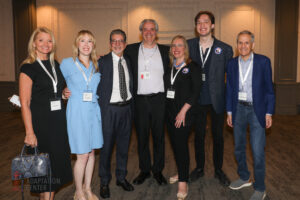
Attendees gather during the 2026 Climate Champions Awards & Benefit Ceremony. (photo by Janet Combs)
The winners of the coveted Beacon Award were:
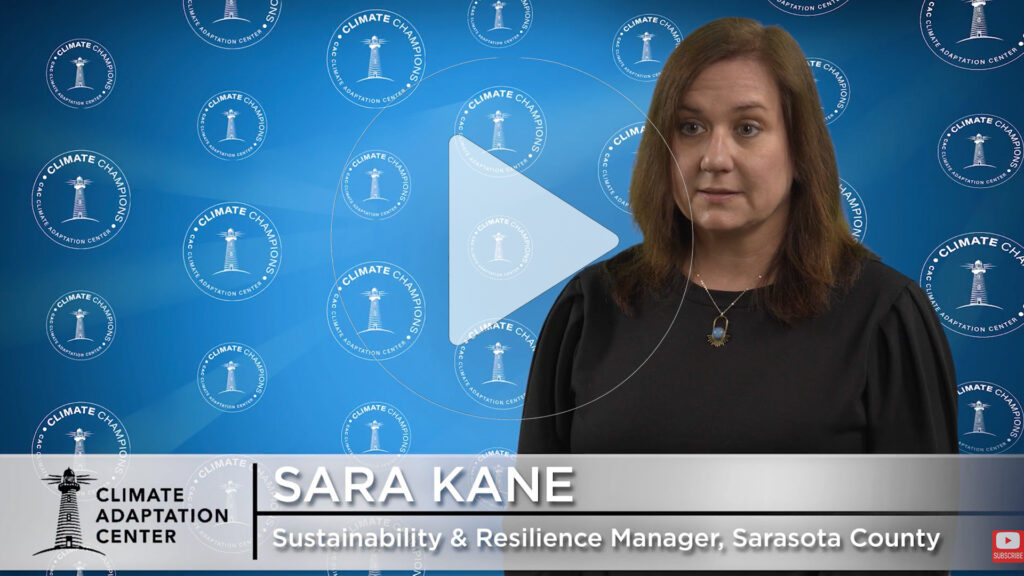
Sara Kane – Sustainability and Resilience Manager, Sarasota County
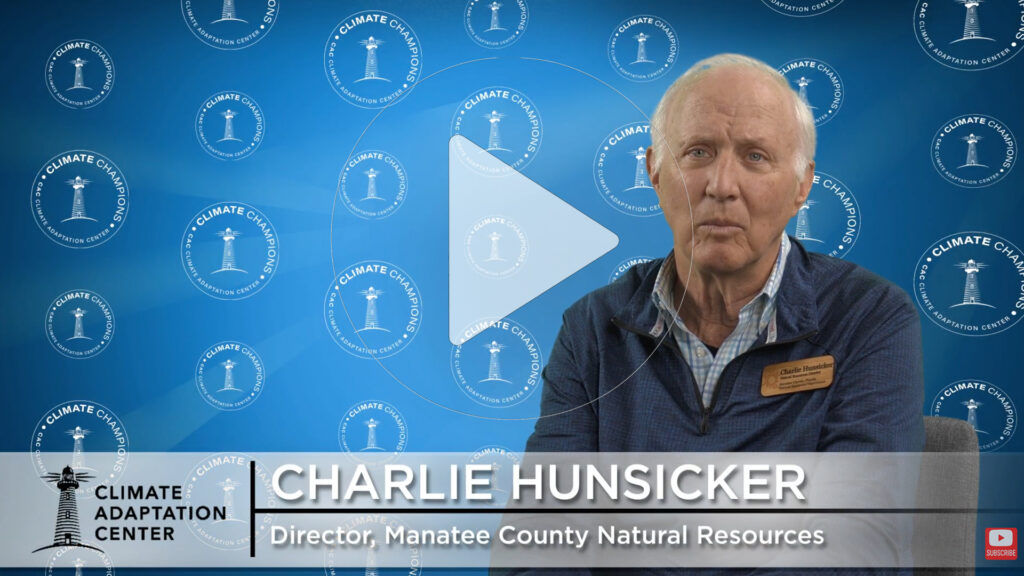
Charlie Hunsicker – Director of Natural Resources, Manatee County
John LaCivita – President and CEO of Willis Smith Construction
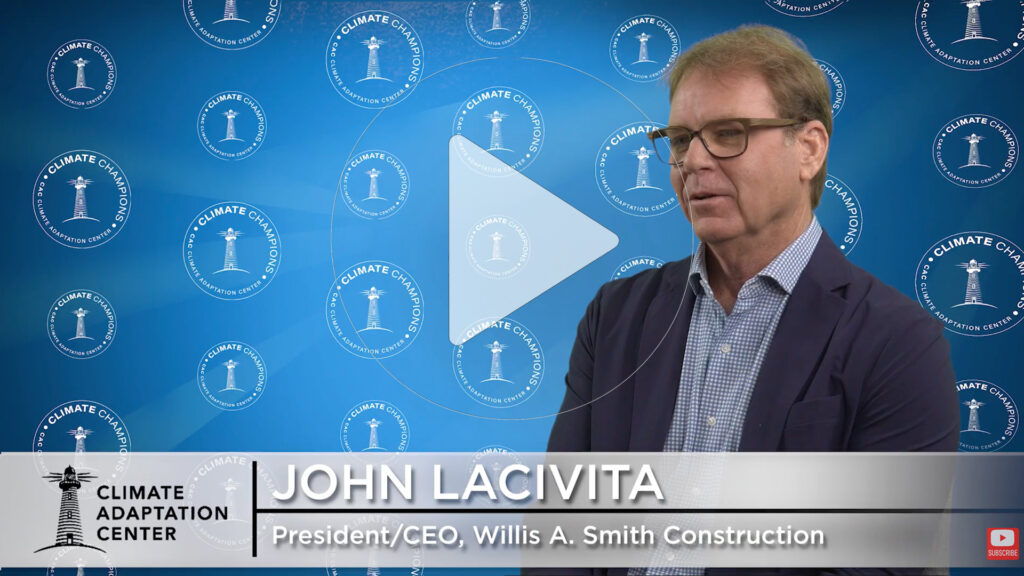
Please enjoy their videos. You will see why they are beacons for climate adaptation. They join our 11 other Climate Champions from years past.
Together this impressive group of 14 men and women will help lead the Suncoast to a resilient future. We hope each and every one of them will play a key role in building the Suncoast Living Laboratory for Climate Adaptation.
Don’t forget, tickets are now available for the 2026 Hurricane Season Forecast Day on Thursday, April 23, at the USF Selby Auditorium. You can buy your tickets here.