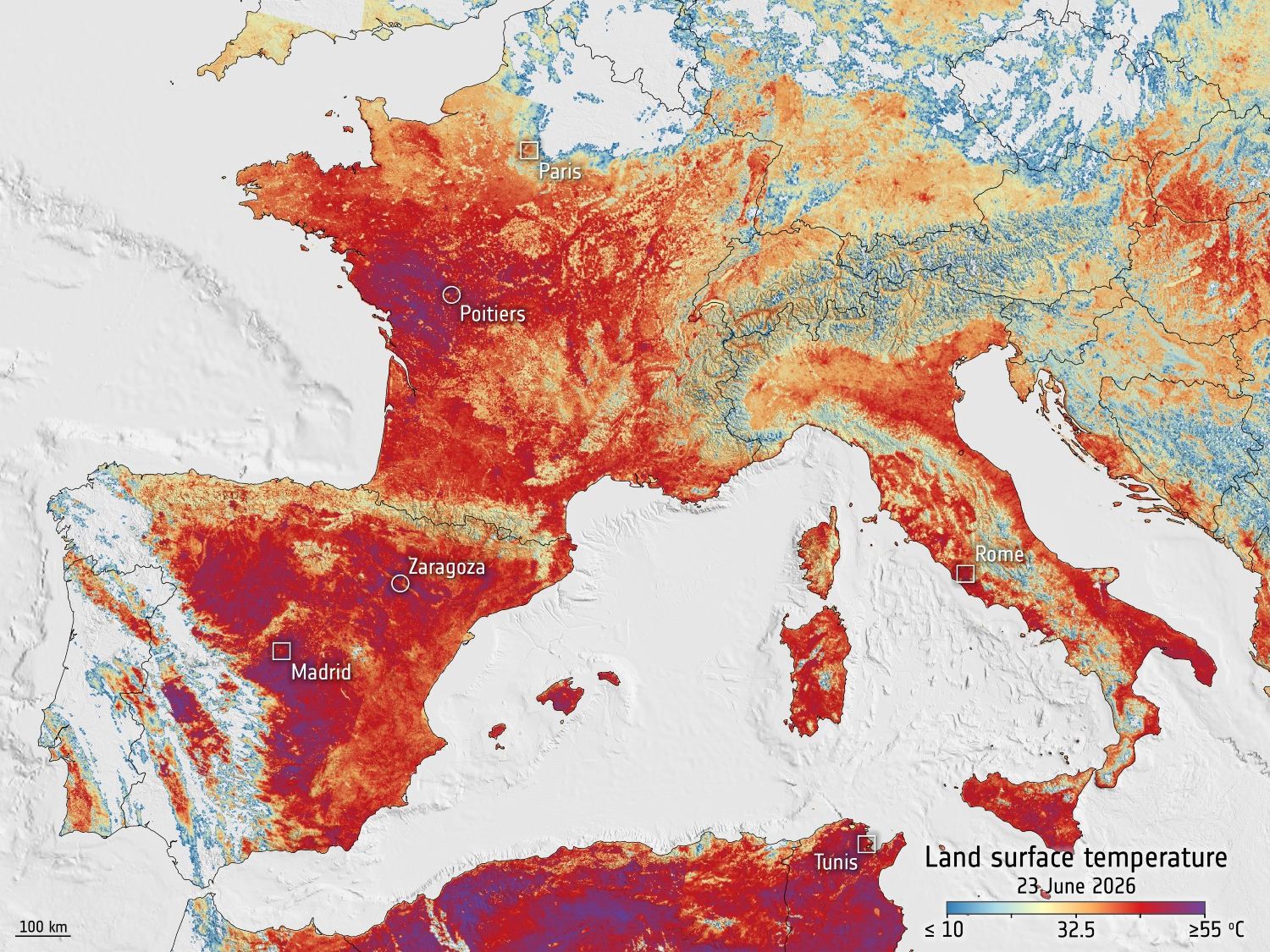
This summer, heat killed at least 35,000 people across Europe. Four back-to-back heatwaves — the worst in the continent’s modern record.
South Florida knows the feeling. This was one of the hottest summers ever recorded along the Suncoast — Bradenton just logged its second-warmest summer on record, and Sarasota felt a heat index of 110 in July.
The air conditioning trap
Here’s the trap: air conditioning keeps us alive, but every unit pumps waste heat back into the street. We cool our homes by heating our cities.
So researchers at the University of Manchester asked a better question: what if the city cooled itself?
A city that cools itself
Their answer, just published in the journal Earth’s Future: catch rainwater on rooftops, then let smart sprinklers mist it back over the roof the moment temperatures cross a set threshold. Evaporation does the work — less AC, less waste heat, fewer heatwave days. And the hotter the year, the bigger the payoff. Bonus: that stored rainwater means less flood runoff when the big storms hit.
What about our humidity?
Now — our humidity. Fair question. They didn’t test this in Manchester drizzle; they tested it on Tokyo: hot, humid, subtropical, a lot like a Sarasota August. And it still worked — the model even cut the Humidex, the feels-like index that accounts for moisture in the air. The researchers are straight that every city needs its own tuning: when to trigger, how much water. That’s not a flaw in the idea. That’s a decision. And decisions are what Sarasota does.
On November 12th, we’re gathering the people making those calls — From Climate Risk to Climate Resilience, right here in Sarasota.
The Bunting Brief is Bob Bunting’s short-form series on the weather and climate forces shaping Florida’s Gulf Coast.
🎟️ Join us November 12 — From Climate Risk to Climate Resilience, Sarasota. Get tickets here.
📬 Get the Bunting Brief in your inbox — subscribe to the CAC newsletter.