NOAA has officially declared that El Niño conditions are now in place across the tropical Pacific Ocean.
For residents along Florida’s Gulf Coast, that is a development worth watching. El Niño can influence weather patterns around the globe, including hurricane activity in the Atlantic Basin. While it may help reduce the number of storms this season, it does not eliminate the risk to the Suncoast.
That’s why staying informed remains just as important as ever.
El Niño has arrived
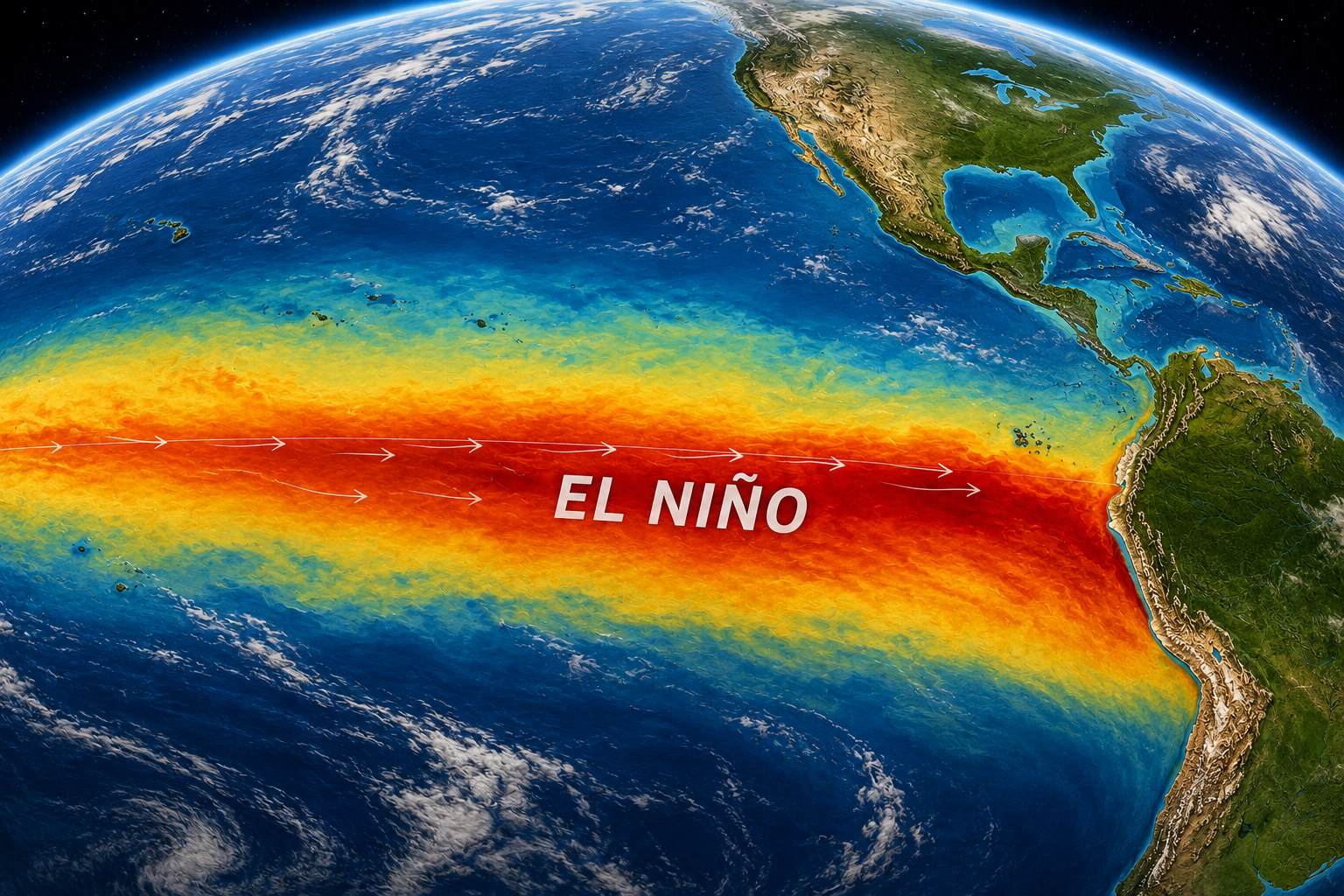
El Niño occurs when ocean waters in the equatorial Pacific become warmer than normal for an extended period of time. Those warmer waters can alter atmospheric circulation patterns around the world.
One of the most important effects for hurricane season is an increase in upper-level winds across portions of the Atlantic Basin. Those stronger winds, known as wind shear, can disrupt developing tropical systems and make it harder for hurricanes to organize and strengthen.
For that reason, El Niño is often associated with less overall hurricane activity in the Atlantic.
Climate Adaptation Center CEO and Chief Scientist Bob Bunting has been discussing the growing likelihood of El Niño for months. In his latest hurricane season forecast, Bob explains why this developing pattern could become one of the key factors influencing hurricane activity during the second half of the season.
Watch Bob’s latest Hurricane Season Forecast on YouTube to learn more about what may lie ahead.
What it means for the Suncoast
A quieter hurricane season does not necessarily mean a quiet season for Florida’s Gulf Coast.
Residents of Sarasota, Manatee, Charlotte, Pinellas, Hillsborough, and surrounding counties know that hurricanes are not measured by seasonal statistics when one is headed toward your neighborhood.
History has repeatedly shown that it only takes one storm to make a season memorable.
Even in years with fewer named storms, a single hurricane can bring destructive winds, flooding rain, storm surge, power outages, and long-lasting impacts to local communities.
That is why emergency managers, meteorologists, and climate scientists encourage residents to focus less on the total number of storms and more on staying aware of any threats that develop during the season.
Why staying informed matters
The Climate Adaptation Center’s free hurricane updates are designed specifically for Florida residents and the communities of the Suncoast.
When tropical threats develop, our team provides focused updates that go beyond national headlines. Subscribers receive information about forecast confidence, potential Florida impacts, changing risks, and the factors our scientists are watching most closely.
You’ll hear directly from Chief Scientist Bob Bunting, veteran meteorologist Ric Kearbey, and the Climate Adaptation Center team as conditions evolve throughout the season.
The goal is simple: provide timely, science-based information that helps families make informed decisions before a storm becomes an emergency.
Get free hurricane updates
If you haven’t signed up yet, now is the time. Just click on the “Get Hurricane Updates” at the top of this page, or the “Subscribe” button below.
El Niño may reduce hurricane activity across the Atlantic this year, but it cannot remove the risk to Florida’s Gulf Coast.
Stay connected with the Climate Adaptation Center and receive free hurricane updates delivered directly to your inbox throughout the season.
Because when it comes to the Suncoast, it only takes one storm.