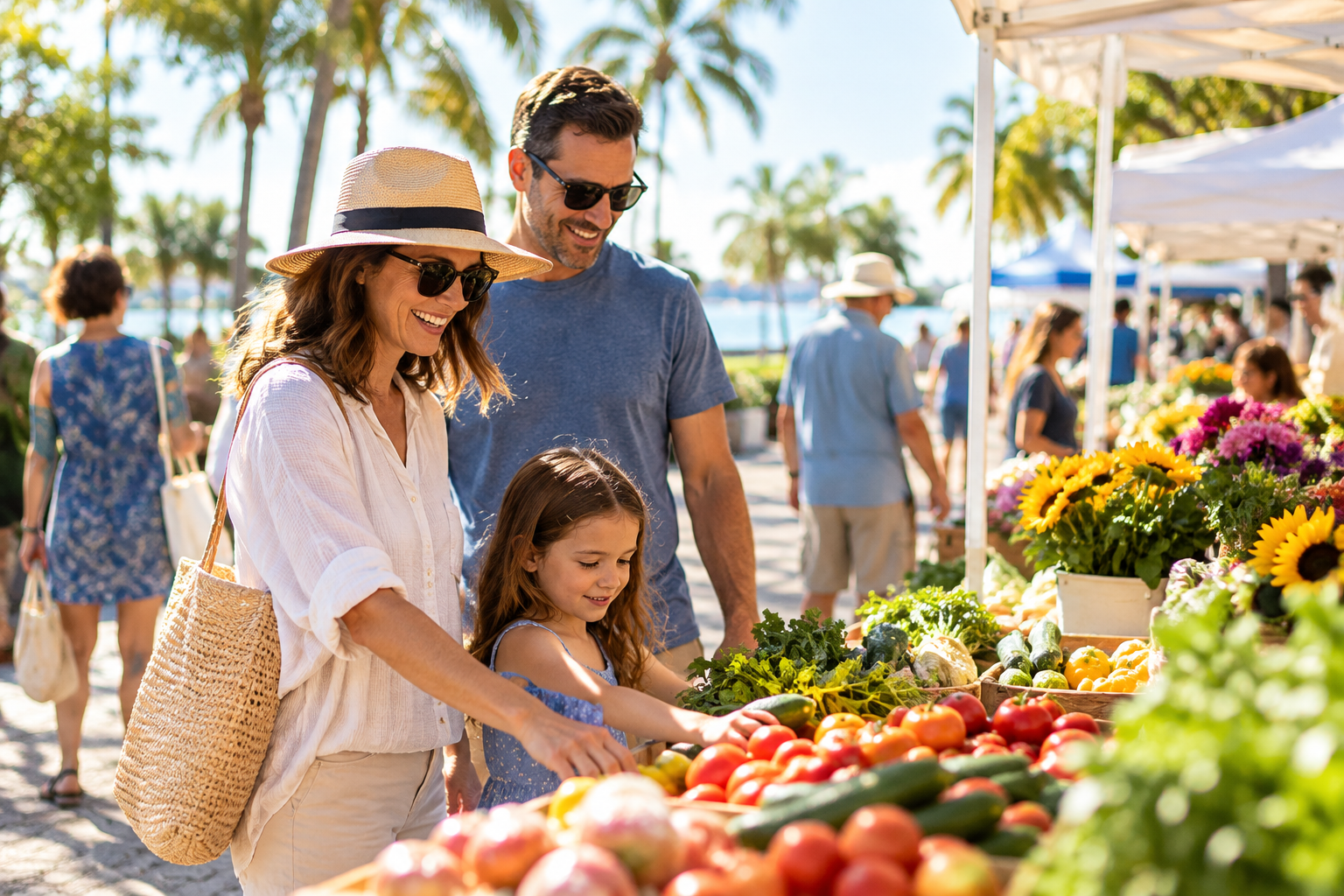
Picture a beautiful Sarasota afternoon.
Families are wandering through Marie Selby Botanical Gardens. People are enjoying the waterfront at The Bay. Somewhere nearby, musicians are rehearsing for a performance that will bring hundreds of people together.
It’s the kind of day that reminds us why so many people fall in love with Sarasota.
But here’s a question we probably don’t ask often enough.
What will it take to keep Sarasota this special 20, 30, or 50 years from now?
We usually talk about climate resilience in terms of hurricanes, flooding, rising seas, and the cost of protecting homes and businesses.
Those are enormous concerns, of course.
But there’s another side to the conversation. What about the gardens, parks, cultural institutions, and public spaces that make Sarasota more than just another beautiful place along Florida’s Gulf Coast?
Protecting those places is also about protecting our quality of life.
And an ambitious new effort being developed by the Climate Adaptation Center could help Sarasota become a model for doing exactly that.
Three Sarasota treasures. One shared future.
Consider three organizations that, on the surface, might not seem to have much in common.
Marie Selby Botanical Gardens is internationally recognized for its botanical collections, research, and extraordinary connection to Sarasota’s natural environment.
The Bay is transforming 53 acres of publicly owned waterfront into a park designed for everyone to enjoy. Its development has incorporated features intended to improve stormwater management and coastal resilience.
And the Sarasota Orchestra is working toward a new Music Center, an investment in the region’s cultural future and the generations who will experience music there.
One is rooted in nature. Another brings people together along the waterfront. The third enriches our lives through music.
Different missions. Different buildings. Different challenges.
But they share something important.
Their futures are connected to Sarasota’s future.
When hurricanes strike, when coastal flooding becomes more frequent, or when environmental conditions change, the consequences reach well beyond individual properties.
They affect how we live, where we gather, what we preserve, and what kind of community we leave behind.
What if Sarasota could become a living laboratory?
Imagine being able to better understand what’s happening along Sarasota Bay as conditions change.
Not simply relying on regional forecasts or waiting until after a storm to assess the damage, but collecting detailed local information about water levels, tides, rainfall, water quality, and other conditions that affect our shoreline.
Now imagine using that information to evaluate which approaches actually work.
Do living shorelines provide measurable benefits? How well do different landscaping and building materials perform? Where are flooding risks increasing? Which investments offer the greatest long-term protection?
That’s the thinking behind the proposed Sarasota Living Laboratory for Coastal Resilience, or LLCR.
The Climate Adaptation Center envisions a connected coastal observation and research system beginning with five important locations around Sarasota Bay, including Selby Gardens, The Bay, the Ringling Museum, and the New College campus area.
The initial effort would combine environmental sensors, scientific analysis, predictive models, and real-world testing of adaptation strategies.
Rather than simply asking what might happen to Sarasota in the future, the Living Laboratory would help us measure what’s happening now and make better-informed decisions about what to do next.
And the idea doesn’t stop at the boundaries of those founding sites.
Over time, the information and lessons could benefit surrounding neighborhoods, businesses, property owners, and eventually communities farther inland.
The goal is not to make Sarasota hurricane-proof. No technology or landscape design can promise that.
The goal is to make Sarasota better informed, better prepared, and more capable of adapting as conditions change.
The Bay is already showing what’s possible
We don’t have to look far for an example of resilience being incorporated into a public space.
At The Bay, designers have included features such as stormwater treatment, elevated portions of the site, and a restored living shoreline.
Those investments serve more than one purpose.
They help create an attractive waterfront park while also addressing environmental and coastal challenges.
That’s an important idea because resilience doesn’t always have to look like a concrete wall or an expensive piece of emergency equipment.
Sometimes it looks like a beautiful park.
Sometimes it’s a healthier shoreline, improved drainage, or a landscape designed to work with nature rather than against it.
And sometimes it’s simply having better information before making a major investment.
The proposed Living Laboratory could help communities evaluate approaches like these more systematically, learning what works, what doesn’t, and where improvements are needed.
What does music have to do with climate resilience?
Quite a bit, actually.
Think about what a major cultural institution represents to a community.
It’s more than a building.
It’s an investment in education, creativity, economic activity, and the experiences that bring people together.
When organizations plan facilities intended to serve their communities for generations, they have to consider what the world around those facilities may look like decades from now.
That includes infrastructure, access, environmental conditions, and the ability to continue serving the public when challenges arise.
The Sarasota Orchestra’s new Music Center provides an opportunity to explore that broader idea of cultural resilience.
And it’s a reminder that preparing for the future isn’t exclusively the responsibility of meteorologists, engineers, or environmental scientists.
It involves architects, business leaders, educators, artists, public officials, and the people who call this community home.
The bigger opportunity for Sarasota
Here’s what makes the Living Laboratory concept especially interesting.
Instead of having individual organizations tackle every challenge independently, what if Sarasota could develop a shared foundation of scientific information that helps everyone make better decisions?
A coastal observation network could provide valuable information about changing conditions.
Research projects could test different approaches to protecting shorelines and infrastructure.
Community institutions could share what they learn.
And local governments, businesses, and property owners could eventually use that knowledge when planning investments of their own.
It’s an ambitious vision, and there’s considerable work ahead.
The first phase would focus on detailed planning, engineering, technology selection, financial feasibility, and developing the blueprint needed to move toward implementation.
But the long-term possibility is compelling.
Sarasota could become a place where climate science isn’t just discussed. It’s put to work in the community, measured, improved, and shared.
And if the approach succeeds here, other coastal communities facing similar challenges could learn from it.
The people shaping this vision are coming together next week
On Thursday, November 12, the Climate Adaptation Center will host its 6th Annual Florida Climate Conference: From Climate Risk to Climate Resilience in Sarasota.
Among the featured speakers are three leaders whose organizations represent some of the community assets we’ve been discussing.
Jennifer Rominiecki, President and CEO of Marie Selby Botanical Gardens, will discuss climate resilience at Selby Gardens.
A.G. Lafley, former Chairman and CEO of Procter & Gamble and Founding CEO of the Bay Park Conservancy, will explain how The Bay is helping create a more resilient waterfront.
Joe McKenna, President and CEO of the Sarasota Orchestra, will discuss building cultural resilience through the organization’s new Music Center.
And Bob Bunting, CEO and Chairman of the Climate Adaptation Center, will introduce the vision for the Sarasota Living Laboratory for Coastal Resilience.
Together with other scientists and community leaders, they’ll explore how these individual efforts could become part of a much larger approach to protecting Sarasota’s future.
This isn’t just a conversation about what climate change could do to Florida.
It’s a conversation about what Florida can do to prepare.
Join the conversation on November 12
The conference takes place at Selby Auditorium at New College of Florida in Sarasota, from 9 a.m. to 4 p.m.
With approximately 30 in-person tickets remaining as of November 5, seating is limited.
Can’t attend in person? Virtual tickets are also available, allowing you to watch the conference online.
Reserve your seat or register for virtual attendance:
The Sarasota we love didn’t happen by accident.
Generations of people invested their time, creativity, resources, and vision into making this community what it is today.
Keeping it special for our children and grandchildren won’t happen by accident, either.
And perhaps that’s the most important reason to start thinking differently about resilience.
We’re not just protecting Sarasota from the next storm. We’re protecting what makes Sarasota worth calling home.