
Record Heatwaves. Again.
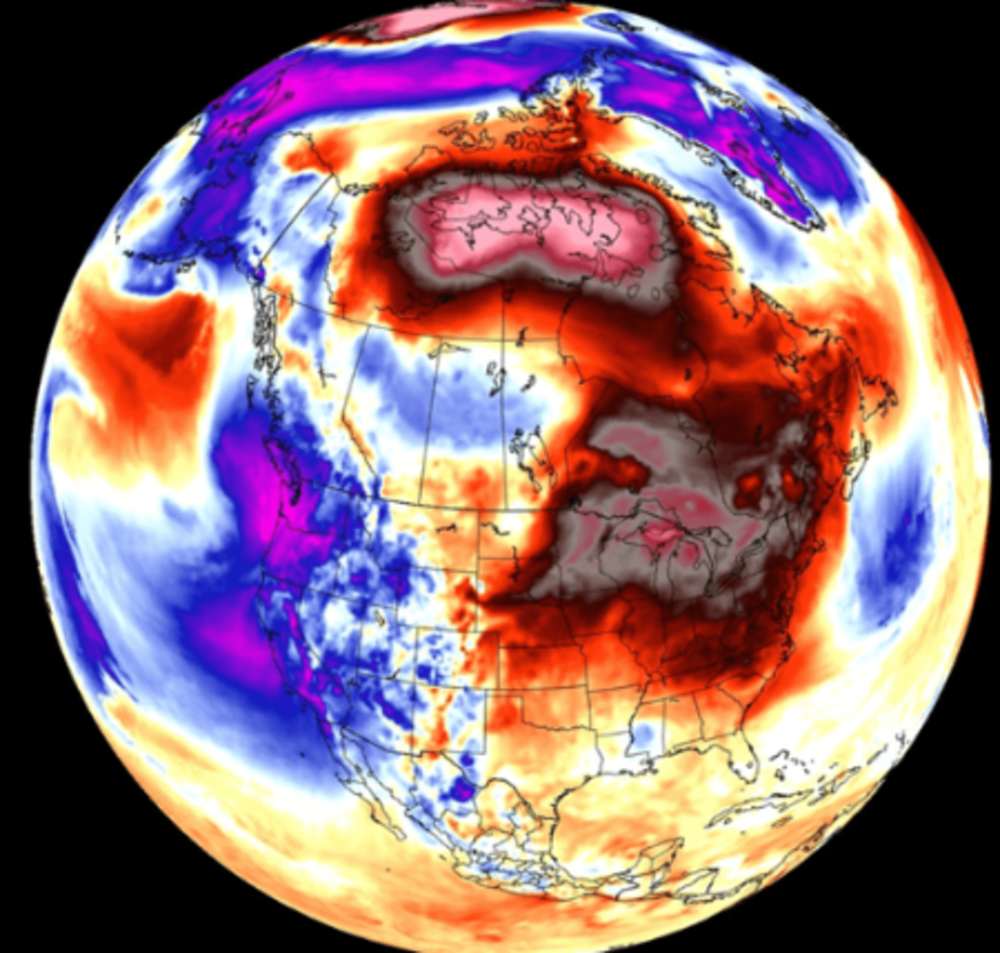
In the first six months of 2026 the Northern Hemisphere was ravaged by a series of extraordinary heatwaves. At this writing, still more heatwaves are forecast for Europe and North America. This article explores the impact of these events, the atmospheric conditions driving them, and what science tells us about what we can expect in the future.
This article has two parts: Part 1, which reviews the extent and severity of the heatwaves through June, 2026; and Part 2, where we discuss the science of heatwave formation, the impact of a changing climate, and what to expect in the future.
Chaotic, Extreme Weather Marked Early 2026
In January, a wandering polar jet stream released frigid Arctic air into parts of Europe and North America. Europe experienced its coldest January in 16 years. Nonetheless, monthly temperatures in January were above average over much of the globe, including in large parts of the Arctic, in Greenland and western North America. By March, the cold weather of January had given way to unusual heat and a series of record breaking heatwaves.
U.S. Southwest
The Northern Hemisphere winter was just winding up when a rare March heatwave hit the U.S. Southwest, kicking off four chaotic months of extreme heat events in the Northern Hemisphere.
From the CAC review of the first heatwave: “In March 2026, we experienced one of the most astonishing weather events in U.S. history. Over 11 days, a powerful heat wave, driven by an exceptionally large, slow-moving heat dome, formed over the southwestern U.S. before slowly moving eastward. In a month that normally marks the cool tail end of winter, the heat wave set over 7,000 daily high-temperature records and nearly 2,000 monthly records across the U.S. Over 160 cities experienced their hottest March on record, with 17 states setting new statewide March high-temperature records.” In Yuma, Arizona, the temperature hit 109°F (42.8°C), a full 28 degrees Fahrenheit above the seasonal average.
India and Pakistan
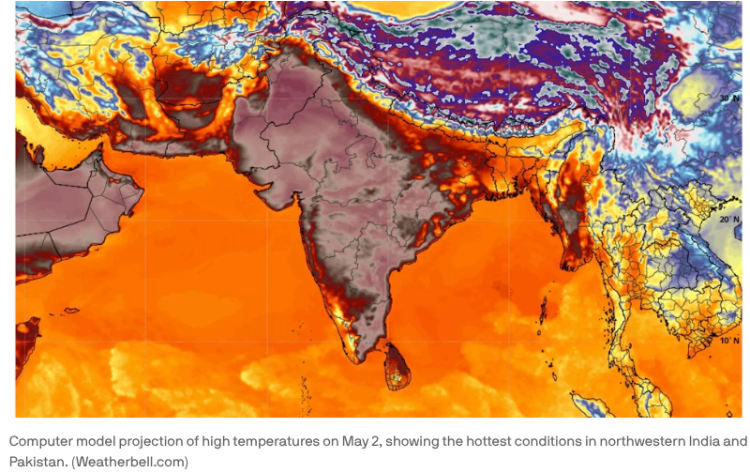
South Asia is accustomed to sustained heat in the months leading up to the monsoon in June, but this year the area often referred to as the Indian Subcontinent suffered unprecedented heatwaves from mid-April onward. Day after day, temperatures exceeding 45°C (113°F) were recorded across the region. At one point in April all 50 of the world’s 50 hottest cities were in India. By late April, 98 of the 100 hottest cities in the world were located in India. Daily temperature maximums exceeded 46°C (114.8°F), with some locations 5 to 8 degrees above the seasonal average.
Europe
In late May, western Europe experienced an unusually early intense heatwave. Hardest hit were western France, England and Wales, with temperatures more than 10°C (18°F) above average. The heatwave broke many local and national temperature records, with weather stations in France, Portugal, Ireland and England setting new records for May.
In France, multiple stations broke the previous national record of 37.0°C (98.6°F) for May. Temperatures in Portugal reached 40°C (104°F). In Great Britain, a new all-time temperature record of 35.1°C (95.2°F) was recorded in Southwest London.
A second, even more severe heatwave event began in mid-June. According to the Copernicus Climate Change Service, June 2026 became the hottest June on record for Western Europe, with many locations recording temperatures as much as 8°C above the 1991-2020 average
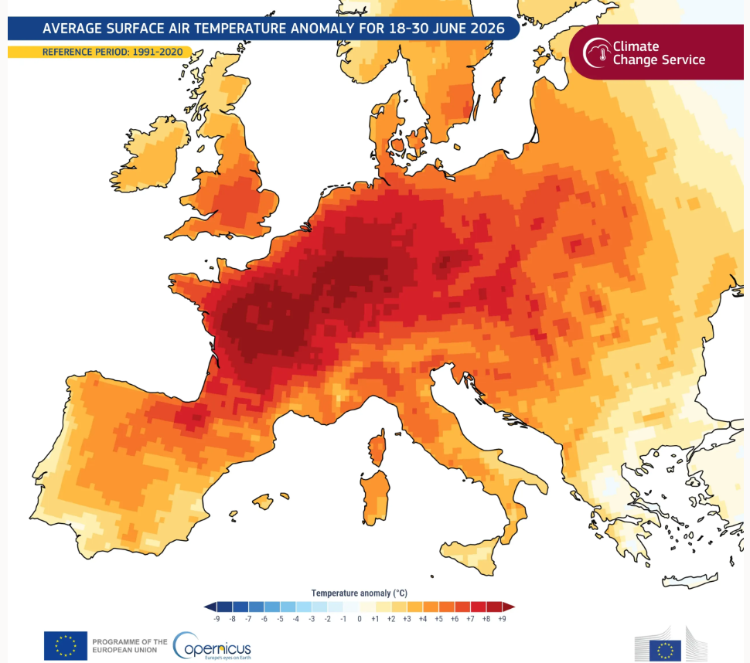
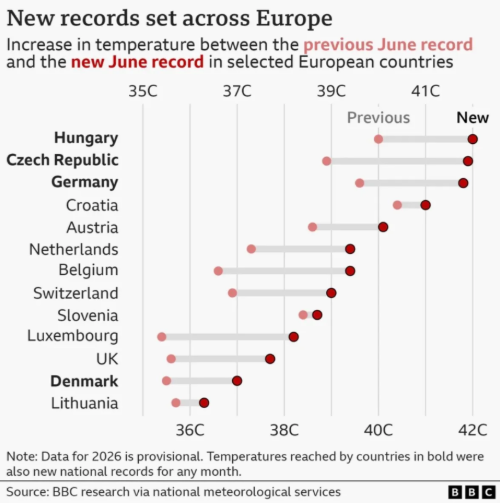
In all, more than a dozen countries set new June temperature records, often two or three degrees Celsius hotter than the previous record — exceptionally large margins.
June 23 was France’s hottest day since measurements began in 1947. France logged its highest-ever nationwide average temperature, reaching 44.3° C (111.7°F) in Pissos, while Paris hit a June record of 40.9°C (105.6°F).
The UK set a new June record of 37.7°C (99.86°F), more than 2°C (3.6°F) hotter than the previous record, set in 1957.
Germany broke its all-time record — 3 days in a row! The final new record of 41.7°C (107°F) was set on June 28.
Also on June 28, the Netherlands set a new record of 39.4°C for the month. Hungary recorded an all-time high of 42°C (107.6°F) on 30 June.
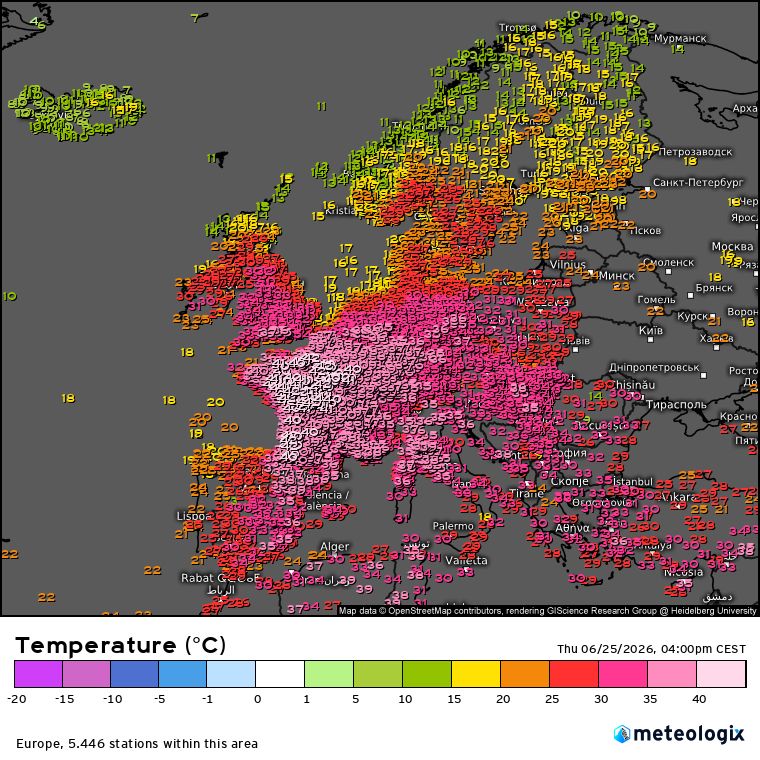
The graphic below shows high temperatures recorded on June 25 for weather stations across Europe. (While the numbers are largely unreadable, the colors show the extent of the heatwave across Europe, peaking over France. Pink numbers are 35-39°C, the very light pink/white numbers are 40°C and above.)
The graph below shows a sampling of new June records across Europe. Typically, we would expect new temperature records to be a few tenths of a degree above the old record. The dramatic jump in the 2026 records highlights the unprecedented impact of the 2026 heatwave.
U.S. Northeast
In parallel with the heatwave in Western Europe, a massive early summer heatwave developed in the U.S. in late June. By the time it subsided July 5 it had shattered over 1,500 daily temperature records across 40 states. During the heatwave 180 million people were under National Weather Service “major” or “extreme” heat alerts. The following graphic shows the massive size of the heatwave in early July.
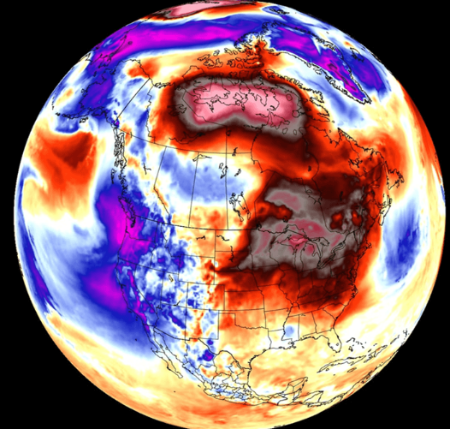
Image Credit: Severe Weather Europe
The heatwave formed when a large high pressure system stalled directly over the eastern U.S. and parts of Canada, trapping intense surface heat and soaring humidity across more than two-thirds of the contiguous US. (More on heatwave formation in Part 2)
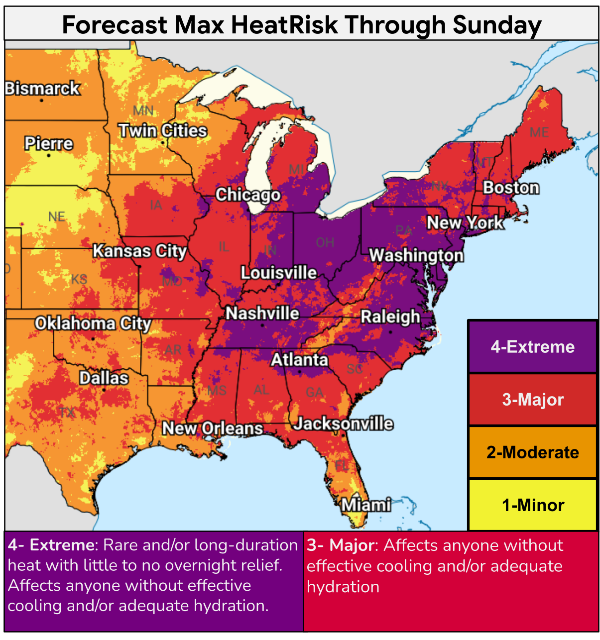
Tens of millions of people in more than 20 states experienced temps of 100°F or more (37.8°C). The following National Weather Service advisory map, dated July 2nd, shows just how much of the Northeastern U.S. was at serious risk from the heatwave.
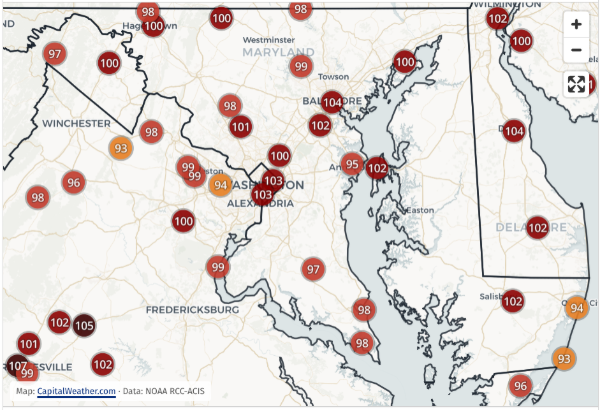
Washington D.C. experienced its hottest July 4th on record in 2026, reaching a high of 103°F (39.4°C) with heat index values soaring between 110° and 115° F. Atlantic City, New Jersey, reached 106°F (41 °C). Philadelphia exceeded 100°F, forcing the city to cancel its Fourth of July parade alongside Washington, D.C.
A total of 148 temperature records were set on July 4th across the Eastern U.S. Humidity pushed the heat index higher, to dangerous levels between 105°F and 115°F. Peak temperatures on July 4th for Washington and the surrounding area are shown in the following graphic.
In Canada, record high temperatures affected much of Ontario and Quebec on July 1, with a “feels like” temperature of 46 °C (115 °F) recorded in Canada’s capital city of Ottawa.
The widespread adoption of air conditioning prevented many heat-related deaths. However, the resulting demand put the Northeastern power grid infrastructure under critical stress. State governments were forced to temporarily bypass some environmental restrictions, allowing power plants to run at full capacity and activating emergency backup diesel generators to prevent cascading blackouts.
Nonetheless, hundreds of thousands of homes across multiple states suffered power blackouts. New York City saw thousands of people without power July 3-4. Public transit suffered, including cancellation of a number of Amtrak trains.
Coming Up: 2026 Extreme Heat Hammers The Northern Hemisphere – Part 2
In Part 2 we will dig into:
- How These Heatwaves Happened,
- The Impact of Climate Change, and
- What’s Ahead?
Stay tuned!